
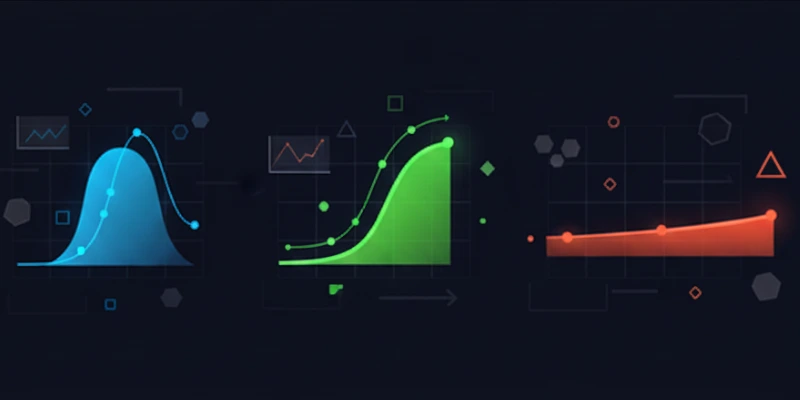
Understanding data distributions is a fundamental part of data science because nearly every statistical method relies on them. A distribution describes how values in a dataset are spread out. When you know the shape and behavior of your data, you can choose better models, avoid common mistakes, and draw more reliable conclusions. For beginners and professionals looking to strengthen these skills, enrolling in a Data Science Course in Trivandrum at FITA Academy can provide practical guidance and hands-on experience. This post breaks down key types of distributions in clear terms and explains when each one is most useful.
What a Distribution Tells You About Your Data
A distribution helps you see the overall pattern in a dataset. It shows whether values cluster around a point, spread widely, or form clear groups. Recognizing these patterns makes it easier to decide which statistical techniques or machine learning models work best. For example, some methods assume data is balanced around the center, while others can handle heavily skewed information. When you understand the distribution, you reduce guesswork and make stronger decisions.
The Normal Distribution and When It Applies
The normal distribution is one of the most recognized shapes in statistics. It has a simple bell-like curve where most values sit near the average, and fewer values appear at the extremes. Many real world traits such as height, weight, or measurement errors often follow this pattern. You should use techniques built for normal data when your dataset looks fairly symmetric and centered.
Models like linear regression or common significance tests work best when the underlying data is close to this form. For those looking to gain practical knowledge on distributions and other core concepts, taking a Data Science Course in Kochi can provide hands-on experience and expert guidance. If your data heavily skews in one direction, it may not be the right choice.
The Skewed Distribution and How to Handle It
A skewed distribution appears when values lean heavily toward one side. Income data is a classic example because many people earn moderate wages while a small group earns very high amounts. When data is skewed, averages can give a misleading picture of the typical value. In such cases, medians or percentiles often give clearer insight. You might also choose models that handle skewed behavior or apply transformations that make the data easier to work with. Recognizing skew early helps you avoid misinterpretation and select better tools.
The Uniform Distribution and When It Fits
A uniform distribution occurs when every value has a similar chance of showing up. This pattern appears in random simulations or controlled experiments where each outcome is equally likely. You may use this distribution to test algorithms or build synthetic datasets.
It is also helpful when you want to avoid accidental bias by spreading values evenly across a range. For learners who want practical exposure to distributions and other key data science concepts, joining a Data Science Course in Jaipur can provide hands-on projects and expert instruction. Although real world data rarely follows a perfect uniform shape, it is a helpful reference point for clean and unbiased sampling.
The Importance of Choosing the Right Distribution
When you choose methods that match your data distribution, you increase accuracy and reduce errors. The shape of your data influences how you interpret trends, perform tests, and build models. Even simple tasks like identifying outliers depend on understanding the underlying pattern. By learning how different distributions behave, you build a strong foundation for any data science project.
While mastering distributions is crucial for data science, many aspiring professionals also explore broader education options. For instance, enrolling in a reputable B School in Chennai can provide strong business fundamentals that complement technical skills, helping you stand out in analytics roles.
If you can recognize these common distribution types, you will make more confident decisions and get better results from your data.
Also check: The Role of Storytelling in Data Visualization