
In today’s fast-paced businesses, effective project management is more important than ever. To plan, execute, and manage their projects from engineering and construction to IT and infrastructure, organizations rely on strong tools. Oracle Primavera P6, which is well-known for its ability to manage intricate, multi-layered projects, is among the most dependable project management systems. FITA Academy’s Primavera P6 course offers a comprehensive understanding of project management principles and scheduling techniques, covering project planning, resource allocation, cost management, and progress tracking.
It enables project managers to precisely track progress, assign resources, and break down tasks. However, because of its many capabilities, novices frequently find the UI overwhelming. The secret to success is knowing how to use the software’s tools wisely and navigate it efficiently. Through useful strategies and unambiguous instructions, you will learn how to confidently use Primavera P6, optimize your productivity, and enhance the results of your projects.
Understanding Oracle Primavera P6 and Its Role
Organizations may plan, organize, and manage complicated projects with the aid of Oracle Primavera P6, a professional project portfolio management program. It enables users to design comprehensive project plans, specify tasks, allocate resources, and track advancement in real time. Its capacity to manage thousands of tasks inside a single project while preserving control and clarity is one of its fundamental advantages.
Primavera P6 employs sophisticated scheduling techniques including the Critical Path Method (CPM), which helps identify the most crucial tasks that affect project completion, in contrast to simpler tools. Because of this, it is particularly useful in sectors where cooperation and timing are crucial. By comprehending its function, Primavera P6 can be used as a complete system for efficiently managing every facet of a project lifecycle, rather than merely as a scheduling tool.
Setting Up Primavera P6 and Getting Started
Setting up Primavera P6 correctly and becoming comfortable with its interface are prerequisites for using it. You start by building a database or connecting to an already-existing one after installing the software. Once inside, you’ll see a hierarchical layout with different workspaces, the Organizational Breakdown Structure (OBS), and the Enterprise Project Structure (EPS). Spend some time examining the navigation panels, toolbars, and major menus. Primavera Training in Chennai provides practical, hands-on training in project management methodologies, focusing on planning, scheduling, resource allocation, and cost control using Primavera P6.
You can improve the interface’s usability by personalizing your layout by changing the columns, filters, and views. Setting up calendars, which specify the working days and hours for your tasks, is also crucial. Your schedules will be correct from the start if you have a well-configured setup. You build a solid foundation that will make all next project management duties easier and more effective by devoting time to learning the interface and fundamental parameters.
Navigating the Dashboard and Key Features
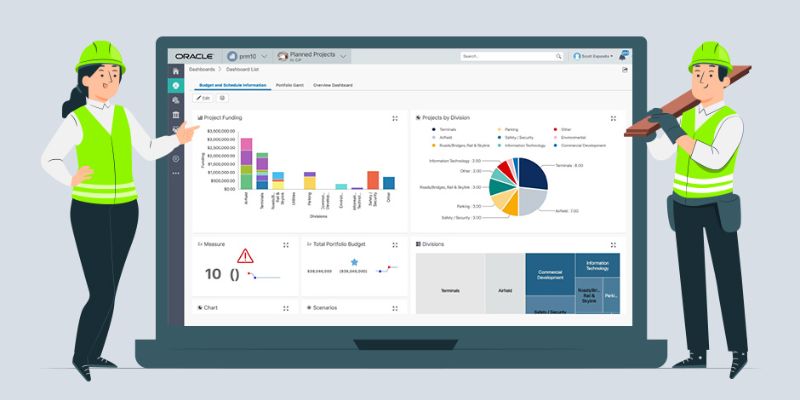
You work with your projects and data on the Primavera P6 dashboard. Access to crucial elements including projects, activities, resources, and reports is made possible by it. One of the most crucial areas is the Activities pane, where you can specify projects, deadlines, and connections. Work Breakdown Structures (WBS), which divide your project into smaller portions, are a useful tool for organizing tasks. Gantt charts, which graphically depict your timetable and assist you in monitoring your progress, are another aspect of the dashboard.
By allowing you to concentrate on particular aspects of your project, filters and layouts enhance decision-making and clarity. You’ll see how interrelated these features are as you use them. Effective project management and preventing confusion during complicated operations depend on knowing how to navigate between these areas.
Creating and Managing a Project Step by Step
In Primavera P6, project creation is a methodical procedure that guarantees organization and clarity. To begin, define your project in the EPS, give it a name, and establish start and finish dates. The project should then be broken down into smaller, more manageable parts using a work breakdown structure. Next, include activities with durations and dependencies beneath each WBS element. Primavera Training Placement at a B-School in Chennai can significantly boost your career by equipping you with in-demand project management and scheduling skills. This training helps you gain hands-on experience in Primavera P6, enabling you to effectively plan, manage, and execute complex projects while improving your job prospects in industries like construction, engineering, and IT.
Because it establishes the order of work and aids in the computation of the project schedule, linking activities is essential. You can designate responsibilities and allocate resources after your activities are set up. Update your project frequently by noting developments and making any timeline adjustments. This methodical approach guarantees that your project stays flexible and well-organized. You may confidently and precisely manage even the most complicated tasks by adhering to a methodical methodology.
Managing Resources, Costs, and Schedules
Project success depends on efficient resource and cost management, and Primavera P6 offers strong capabilities to manage both. To make sure that every activity has the assistance it needs, you can allocate resources like manpower, tools, and supplies to particular tasks. By connecting expenses to resources and activities, the program also enables you to monitor expenditures, providing you with a comprehensive view of your project budget.
By detecting possible conflicts and modifying workloads, scheduling features assist you in optimizing deadlines. Resource leveling, for example, can automatically manage overallocations to guarantee that no team member is overworked. You may avoid delays and budget overruns by carefully controlling resources and expenses. Primavera P6 is a useful tool for keeping control over every facet of your project because of these features.
Tracking Progress and Generating Reports
Primavera P6 is excellent at tracking progress, which is an essential component of project management. Activity statuses can be updated, actual work accomplished can be tracked, and it can be compared to your schedule. These are some of the benefits of primavera P6. This enables you to spot delays and act swiftly to address them. Additionally, the program provides a range of reporting capabilities to assist you in evaluating performance and sharing outcomes with stakeholders.
Reports on timelines, expenses, and resource utilization can be generated, giving you important information about the state of your project. Gantt charts and dashboards are examples of visual tools that facilitate quick comprehension of complex data. Frequent reporting and monitoring guarantee that your project remains on course and that any problems are quickly resolved. You may enhance overall project performance and make well-informed judgments by utilizing these tools.
Common Challenges and How to Overcome Them
Primavera P6 can be difficult for beginners to use because of its many features and complexity. Difficulty comprehending scheduling logic and activity linkages is a prevalent problem. To get around this, practice making basic schedules and concentrate on understanding the fundamentals of dependencies. Navigating the UI, which can initially seem overwhelming, is another difficulty.
Your view can be made simpler by utilizing filters and customizing layouts. Additionally, managing resources can be challenging, particularly when working with big teams. Before tackling more difficult situations, start with smaller projects to gain confidence. To further enhance your comprehension, make use of tutorials and documentation. You can progressively grow more at ease and skilled with the program by tackling these difficulties one at a time.
Tips for Improving Workflow and Collaboration
Adopting good procedures and making the most of Primavera P6’s features are essential to improving your workflow. Use structured WBS components and unambiguous naming conventions to arrange your projects. To monitor changes and gauge advancement over time, use baselines. Maintaining consistent data and sharing updates with your team on a regular basis facilitates collaboration.
To make sure everyone is on the same page, make use of centralized data and common resources. Automating routine tasks, such as scheduling updates, can reduce errors and save time. You can also find areas for improvement by routinely examining your project statistics. You may increase teamwork, boost productivity, and produce better project results by putting these suggestions into practice.
Mastering Primavera P6 for Long-Term Success
Oracle Primavera P6 can be difficult to use at first, but with the correct strategy, it can be an effective tool for project success. You may handle projects more effectively and confidently if you comprehend its fundamental aspects, set up your environment correctly, and adhere to a disciplined process. To develop your talents over time, concentrate on lifelong learning and practice. You will find more sophisticated elements that improve your abilities as you acquire experience. In the end, becoming proficient with Primavera P6 enables you to take charge of your projects, provide outcomes on schedule, and establish a solid reputation as an accomplished project manager.