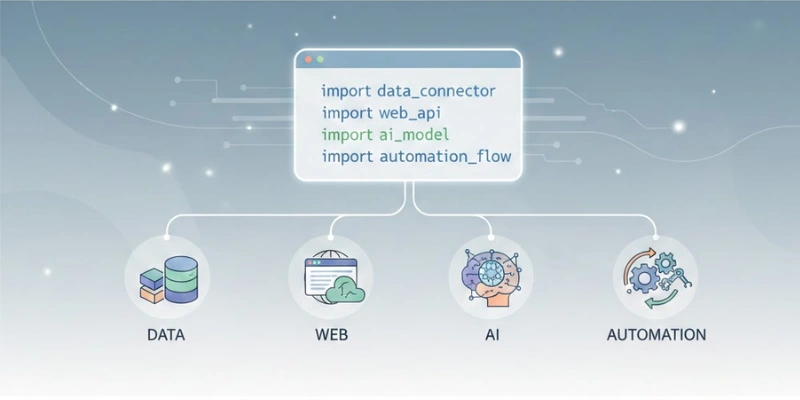
Many beginners learn Python syntax quickly but feel unsure when projects ask for real functionality. This confusion often comes from not knowing which libraries to use and why they matter in real jobs. Understanding libraries helps learners move from basic scripts to practical applications used in companies. That clarity is what most learners look for when starting Python Course in Trichy, as libraries are the bridge between simple code and real-world problem solving.
Why Python Libraries Matter in Real Projects
Python libraries save time by offering ready-made solutions for common problems. Instead of writing everything from scratch, developers import libraries to handle tasks like calculations, data handling, or web requests. This makes development faster and more reliable.
In interviews, candidates are often asked not just about Python basics but about libraries they have used. Knowing why a library exists and where it fits shows practical understanding rather than textbook knowledge.
Libraries for Data Analysis and Handling
Some of the most widely used Python libraries focus on data analysis. These libraries help clean, process, and analyze large datasets efficiently. They are commonly used in business reporting, analytics, and research projects.
For learners, understanding data-focused libraries explains why Python dominates analytics roles. Interviewers often ask how raw data is transformed into meaningful insights, making this knowledge essential for data-related careers.
Libraries for Scientific and Numerical Computing
Python is also strong in scientific and mathematical computing. Specialized libraries handle complex calculations, simulations, and numerical operations with high accuracy. Engineers, researchers, and analysts rely on these tools daily.
This exposure helps learners understand how Python supports technical fields. Professionals with backgrounds like Java Course in Trichy often find these libraries useful when transitioning into data-heavy or research-oriented roles.
Libraries for Web Development
Python libraries play a major role in building web applications. They help manage routing, server logic, databases, and user authentication. These tools allow developers to focus on functionality rather than low-level details.
For beginners, this shows how Python connects to backend development careers. Interview discussions often include how libraries simplify building secure and scalable web applications.
Libraries for Automation and Scripting
Automation is one of Python’s strongest real-world uses. Libraries exist to automate file handling, system tasks, and repetitive workflows. Many IT teams use Python scripts to improve efficiency and reduce errors.
Understanding automation libraries helps learners see Python beyond application development. This skill is valuable in operations, testing, and support roles where automation saves time and improves reliability.
Libraries for Machine Learning and AI
Python is widely used in machine learning and artificial intelligence because of its powerful libraries. These tools help build models for prediction, classification, and pattern recognition. Industries use them for recommendation systems and forecasting.
From a career perspective, Python Course in Erode often aligns with rising demand for AI-related skills. Learners who understand how libraries support machine learning can explain workflows confidently during interviews.
Libraries for Testing and Debugging
Testing libraries help developers ensure code quality and reliability. They support writing test cases, identifying bugs, and validating outputs automatically. This improves software stability and speeds up development cycles. For beginners, this highlights the importance of testing in professional environments. Employers value candidates who understand that writing code is only part of building reliable software.
Python libraries turn simple code into powerful applications across industries. They support data analysis, automation, web development, and advanced technologies, making Python highly versatile. Learners who understand library usage can move confidently into real projects and interviews. Combining this clarity with broader programming knowledge, such as experience gained through Java Course in Erode, helps build a future-ready and adaptable tech career.
Also Check: Advantages of Using JAVA Frameworks